
Relocation Vehicle Shipping From Glendale, AZ
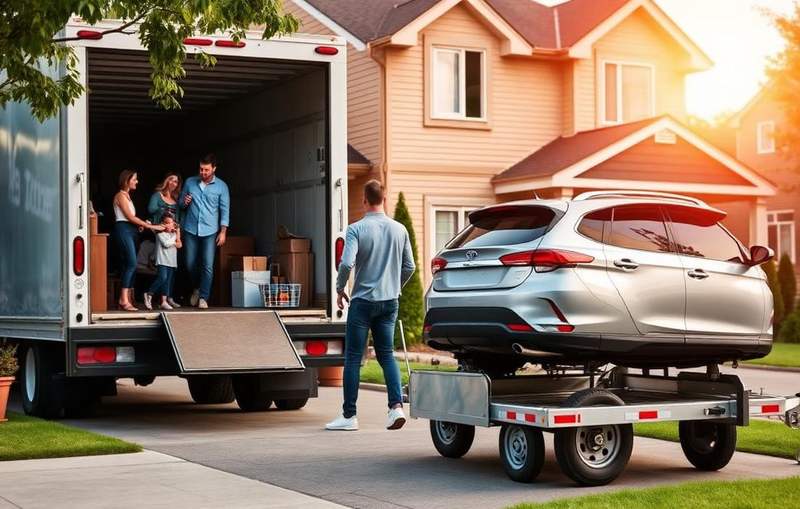
During a move, the vehicle is usually the last thing anyone plans for and the first thing that causes stress.
During a move, the vehicle is usually the last thing anyone plans for and the first thing that causes stress. Relocation vehicle shipping folds the car into the moving timeline so nobody has to drive a second vehicle across the country.
Auto transport works through a network of carriers, each running a route with a fixed number of deck positions. When you book relocation vehicle shipping, your vehicle is matched to a truck whose lane already runs near both your pickup and delivery points. That matching step is what keeps costs reasonable: a carrier filling the last space on an existing route can price the move far better than one making a special trip.
Insurance in auto transport sits with the carrier operating the equipment, and coverage details vary between operators. Ask what applies to your specific shipment and read the answer rather than accepting a general reassurance. We will always tell you what we know and point you to the carrier's documentation rather than invent a figure.
Key Considerations
- Shipping planned around the household moving date
- Options for shipping before, during or after the move
- Guidance on what may not be left inside the vehicle
- Delivery arranged with a friend or family member when needed
- Multiple household vehicles quoted together
Soft-side and hard-side enclosed trailers both protect against debris and weather. Hard-side units offer the most physical protection and the best security; soft-side units are lighter and sometimes easier to load. Either is a substantial step up from open transport for a vehicle where the finish matters.
For customers who are genuinely undecided, a useful test is to imagine the vehicle arriving with a normal amount of road grime and a small stone chip. If that would be a minor inconvenience, open transport is fine. If it would be a problem worth paying to avoid, enclosed is the right call.
Open transport is the default for good reason. Roughly the same conditions a vehicle faces when driven apply on an open trailer: sun, wind, rain and road dust. For a daily driver with an ordinary factory finish, that exposure is unremarkable, and the wide availability of open equipment usually means faster scheduling.
Preparation and Handling
Note existing mechanical quirks honestly: a sticky parking brake, a temperamental starter, a door that needs a particular touch. Drivers handle unfamiliar vehicles every day and a thirty-second explanation prevents most of the small frustrations that occur at loading.
Address active fluid leaks before shipping. A vehicle on an upper deck drips onto the one below it, and carriers may decline a unit that is visibly leaking. If a leak cannot be fixed before pickup, say so when booking so it can be assigned a lower position.
Leave roughly a quarter tank of fuel. That is enough to load, unload and reach a nearby station, without adding unnecessary weight to a trailer that is already managing a legal weight limit. A full tank helps nobody and counts against the load allowance.
Photograph the vehicle thoroughly in daylight. Take wide shots of each side, then closer images of the bumpers, wheels, mirrors, roof and any existing imperfection. Photograph the odometer and the fuel gauge as well. The whole exercise takes ten minutes and gives you a dated record that is entirely your own.
Request a Quote
Call (602) 844-1826 or send your vehicle and route details.
Pickup, Transit and Delivery
Keep the loading area clear. Move other vehicles off the street where you can, make sure the driver has room to lower ramps, and be mindful that loading needs daylight or good lighting to be done properly and documented accurately.
Gated communities, apartment complexes and business parks often have their own rules about commercial vehicles. Check whether gate access, a code or advance notice is required, and whether there is a loading area the property prefers trucks to use. Sorting this out beforehand saves a wasted trip.
Plan to spend fifteen to thirty minutes at pickup. You and the driver walk the vehicle together, note its condition on the bill of lading, agree on what is recorded, and then the vehicle is loaded and secured. Read the condition notes before signing rather than after.
Weather can change a schedule anywhere on a long route. Winter storms across the mountain corridors, high winds through open country and heavy rain in the southeast all slow carriers down, and none of it is negotiable when safety is involved.
Communication during transit is usually straightforward: contact the driver directly for location questions, or contact us for anything about the booking. Expect an update as the truck approaches the delivery region, when scheduling becomes concrete again.
Nothing about transit requires you to do anything except stay reachable. The most common cause of a delayed delivery is a customer who cannot be contacted when the driver enters the destination area.
Inspect in good light and take your time. Walk all four sides, check the roof, look at the wheels and lower panels, and compare what you see with your own photographs. If it is dark or raining, use a flashlight and note on the paperwork that conditions limited the inspection.
Delivery access follows the same logic as pickup. If the destination street cannot take a full-size carrier, agree on a nearby lot ahead of time rather than discovering the problem while the truck is idling in traffic.
Cost Factors
Lane density matters more than most people expect. A route between two large metro areas has many carriers competing for freight, which tends to hold prices down. A route ending in a rural county may require a truck to travel empty in one direction, and that empty mileage has to be paid for by the shipment that caused it.
Flexibility is genuinely worth money. A customer who can accept a pickup within a several-day window gives the planner more routes to work with, and more options usually mean a better rate. A customer who needs a specific day narrows the field, and the price generally reflects the narrower set of choices.
Quotes are estimates until a carrier is assigned to the lane. We will always tell you what a quote is based on and what could change it, because a price presented as a guarantee and then revised is worse than an honest range explained clearly at the beginning.
Season is a real variable in Arizona. Southbound demand into the Valley rises through autumn and northbound demand rises in spring, tightening capacity in the direction everyone is travelling. Booking outside those peaks, or booking earlier within them, is the most reliable way to keep a shipment affordable.
Frequently Asked Questions
What affects the cost of relocation vehicle shipping?
Distance, vehicle size and weight, whether you choose open or enclosed equipment, whether the vehicle runs, how accessible both addresses are, and current demand on the lane. Because those inputs move, we quote based on your actual details rather than a fixed price list.
How long does relocation vehicle shipping usually take?
Short trips within Arizona are often completed in a day or two, regional routes typically take one to three days, and cross-country moves generally fall in a seven to ten day range. These are realistic estimates rather than guarantees, since weather, traffic and hours-of-service rules all affect a route.
How should I prepare my vehicle?
Wash it, photograph it in daylight, remove personal belongings and exterior accessories, leave about a quarter tank of fuel, check tire pressure and battery condition, disable alarms and toll transponders, and be ready to hand over one working key.
Should I choose open or enclosed transport?
Open transport suits most standard vehicles and schedules faster. Enclosed transport suits collector, exotic, low-clearance and freshly restored vehicles, and anyone who wants the finish protected from road debris and weather. We are happy to talk it through.
How far in advance should I book?
A week or more of lead time gives the most flexibility, and longer is helpful during the autumn and spring seasonal peaks in Arizona. Shorter notice is often workable when the lane has available capacity, so it is always worth calling.
What happens if something is wrong at delivery?
Note it on the bill of lading before you sign, photograph it immediately, and contact us the same day. The condition report from pickup is the comparison point, which is why the inspection at both ends matters so much.
Speak With Our Glendale Team
Call (602) 844-1826 for straightforward answers about your vehicle.
Continue Exploring
Related Services
Nearby Service Areas
Start at our vehicle shipping home page, compare every option on the services overview, or contact our Glendale office.